On May 28, 2025, Delta Flight DL275 diverted to Los Angeles International Airport (LAX), turning a routine trans-Pacific journey into a gripping tale of aviation decision-making. This unexpected reroute from Detroit to Tokyo sparked curiosity among travelers and aviation enthusiasts. Why did the flight change course? How did the crew handle the situation? Buckle up as we dive into the details of this high-stakes incident, exploring the causes, responses, and lessons learned in a way that keeps you engaged and informed.
Why Did the Flight Divert?
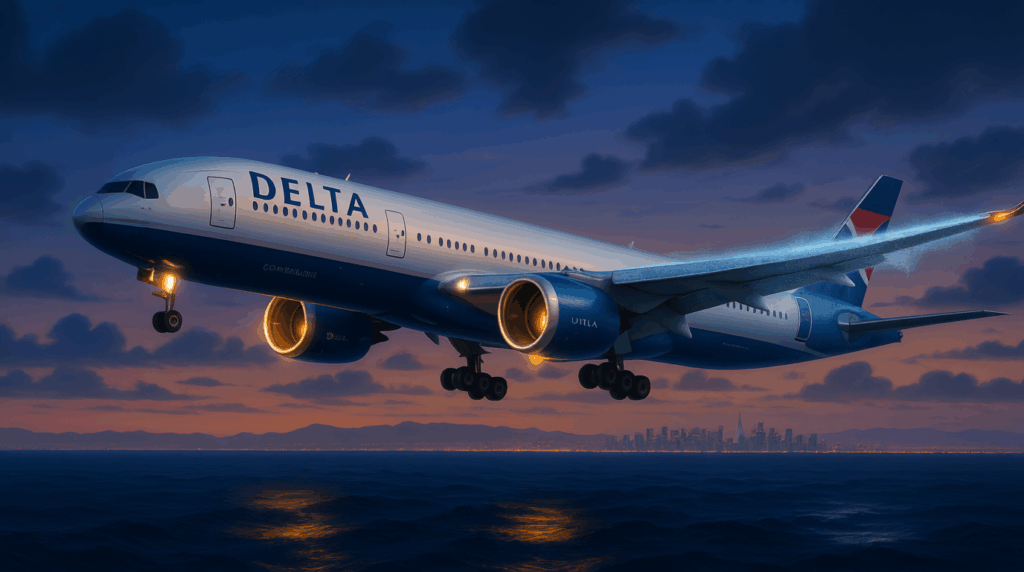
Picture yourself cruising at 38,000 feet, sipping a drink, and watching the in-flight map trace your path over the Pacific. Suddenly, the captain’s voice crackles through the speakers, announcing a change in plans. For the 287 passengers aboard Delta Flight DL275 diverted, this moment came when a critical issue arose with the Airbus A350’s Rolls-Royce Trent XWB engine. Specifically, a failure in the anti-ice system, which prevents ice buildup on engine components, triggered an emergency. Ice in the wrong place can disrupt engine performance, so the crew acted swiftly to ensure safety.
The decision to divert wasn’t random. Los Angeles offered a major Delta hub with top-notch maintenance facilities, long runways for the A350, and ample resources to handle 287 passengers. San Francisco was closer, but LAX’s infrastructure made it the smarter choice. The pilots, trained for such scenarios, coordinated with air traffic control to secure a safe landing at 06:08 local time after 12 hours and 15 minutes in the air.
How Did the Crew Respond?
Imagine the tension in the cockpit as warning lights flash. The pilots of Delta Flight DL275 diverted followed a precise protocol, using a decision-making framework like FORDEC (Facts, Options, Risks, Decision, Execution, Check). They communicated with Seattle Center, declaring an emergency: “Complete anti-ice failure, engine two. Request immediate vectors to the nearest suitable airport.” With 287 souls on board and five hours of fuel, they chose LAX for its operational advantages.
In the cabin, flight attendants kept passengers calm. They shared clear, concise updates, avoiding panic while explaining the need for a precautionary landing. Passengers praised the crew’s professionalism on social media, noting how their calm demeanor turned a stressful situation into a manageable one. One traveler posted, “The crew made it feel like a minor detour, not a crisis.” This transparency built trust, proving that safety always comes first.
What Happened to Passengers?
Landing at LAX didn’t end the journey for the 287 passengers, including 42 in business class and 245 in economy. Delta Flight DL275 diverted left travelers facing delays, missed connections, and disrupted plans. Delta stepped up, providing hotel accommodations, $60 meal vouchers, and rebooking options within 24-48 hours. Compensation averaged $137 per passenger, softening the inconvenience. Ground staff at LAX worked tirelessly to reprocess baggage and arrange onward travel, earning positive feedback on platforms like Reddit.
For some, the diversion added adventure to their trip. Seasoned flyers shared stories of past reroutes, while others felt anxious but appreciated the crew’s updates. Social media buzzed with real-time posts, capturing the mix of curiosity and relief as passengers disembarked safely. No injuries occurred, a testament to the crew’s skill and Delta’s safety-first approach.
What Caused the Anti-Ice Failure?
The heart of Delta Flight DL275 diverted lies in a technical glitch that could have been catastrophic. The Rolls-Royce Trent XWB engine relies on heated bleed air (400-600°F) to keep ice from forming on critical components. Over the Bering Sea, sensors detected a failure in this system, posing a risk in the freezing high-altitude conditions. Industry reports suggest the issue began six hours before takeoff, highlighting a gap in pre-flight checks.
This incident raises questions about maintenance. Could advanced AI predictive tools, like GE’s FlightPulse, have caught the problem earlier? Experts say yes, noting that such systems can detect 94% of mechanical issues before they escalate. Delta’s $2.3 million loss—potentially $5.9 million with long-term impacts—underscores the need for smarter monitoring. The aircraft, N508DN, returned to service after repairs, but the event sparked calls for industry-wide adoption of predictive maintenance.
Why Does This Matter to You?
Ever wondered what happens when your flight takes an unexpected turn? Delta Flight DL275 diverted shows how airlines prioritize your safety over schedules. Diversions, though rare (fewer than 1 in 600 flights), happen for reasons like mechanical issues, medical emergencies, or weather. Each one strengthens aviation safety, as crews and airlines refine protocols based on real-world cases. For you, this means smoother, safer flights in the future.
As a traveler, you can take steps to prepare. Keep essentials like medications and chargers in your carry-on. Use apps like Delta’s or FlightRadar24 for real-time updates. If a diversion delays you, check your rights—Delta often covers hotels and meals for issues within their control, but weather-related diversions may not qualify. Stay calm, listen to the crew, and know that every decision aims to get you safely to your destination.
What’s Next for Aviation Safety?
The story of Delta Flight DL275 diverted isn’t just about one flight—it’s a wake-up call. Airlines are investing in AI to predict and prevent issues, potentially cutting mechanical diversions by 94%. Imagine a future where quantum computing and 5G enhance real-time monitoring, making such events even rarer. Delta’s handling of this crisis, from clear communication to swift passenger support, sets a high standard. Yet, the industry must act faster to adopt these technologies.
The crew’s quick thinking, LAX’s robust facilities, and Delta’s response ensured no one was hurt and passengers were cared for. Next time you board a flight, take comfort in knowing that behind every journey lies a web of systems and people ready to pivot when the unexpected strikes. So, what’s your next travel plan? Wherever you’re headed, trust that the skies are built on decisions that keep you safe.